27 Sept 2026 · aaoms Team · 2 min read
Monogramming a doctor's name in Nepali script
A name on a lab coat is a small mark. Getting the script right is not a small job.

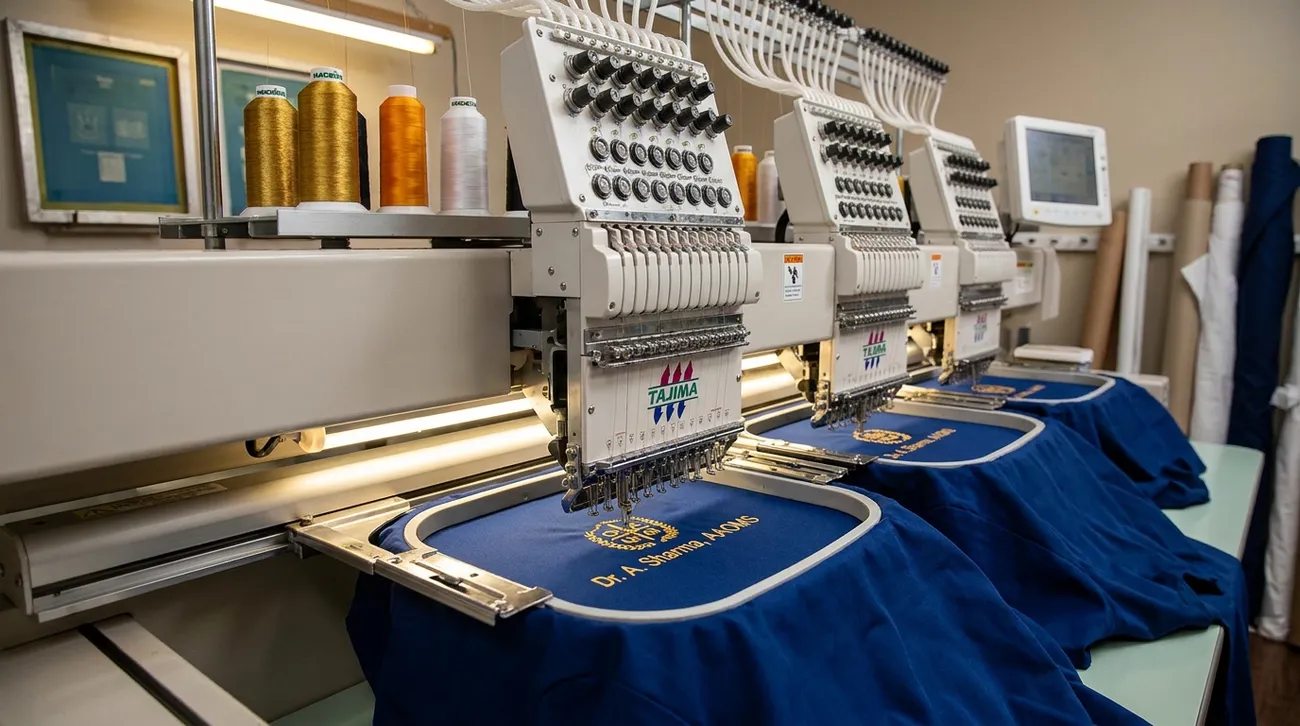
A monogram on a lab coat is usually two or three centimetres wide. It is also the first thing a patient reads, and the wearer notices every error in it for years.
Nepali names present two problems that Latin names do not.
The first is script. Many doctors use a Devanagari name on personal documents and a Latin transliteration professionally. Both are legitimate, and the choice is personal. We ask rather than assume, because a name stitched in the wrong script is not a small mistake to the person wearing it.
The second is length. Devanagari names are often longer in characters than their Latin equivalents, and a long name at two centimetres fills in on itself. When that happens, we suggest either a slightly larger monogram or a switch to initials, and we show both before deciding.
Placement matters as much as the lettering. On a lab coat, the usual position is above the chest pocket on the wearer's left. Too high and it reads as a badge. Too low and the pocket edge crowds it.
Pratik Neupane wanted his full name in Devanagari above the pocket. At the standard two centimetres the loops began to fill in, so we showed him the same name at two point six, and a version in initials. He chose the larger one.
Thread colour is the third decision. Tone on tone is quiet and elegant. Contrast is legible from across a room. Neither is wrong, but a hospital that has already standardised on white thread for its crest should not suddenly have a doctor's name in gold.
We send a preview before stitching. Not a mock-up photograph, an actual stitch sample on the same fabric. The difference between a screen proof and a stitched line is large enough to be worth the extra day.
Need this measured properly?
Send your numbers, or book a call and we will take them with you.