14 Sept 2026 · aaoms Team · 1 min read
Running an embroidery approval across time zones
Nepal runs on UTC plus five forty five. That odd fifteen minutes is a real scheduling constraint.

Nepal Standard Time is five hours and forty five minutes ahead of UTC. It is one of the few time zones in the world that is not a whole or half hour offset, and it makes scheduling with overseas clients slightly awkward.
The practical effect is that our working day overlaps with the Gulf almost completely, with Europe for about five hours in the morning, and with North America barely at all.
For an embroidery approval, that matters, because the process has three steps that each need a reply.
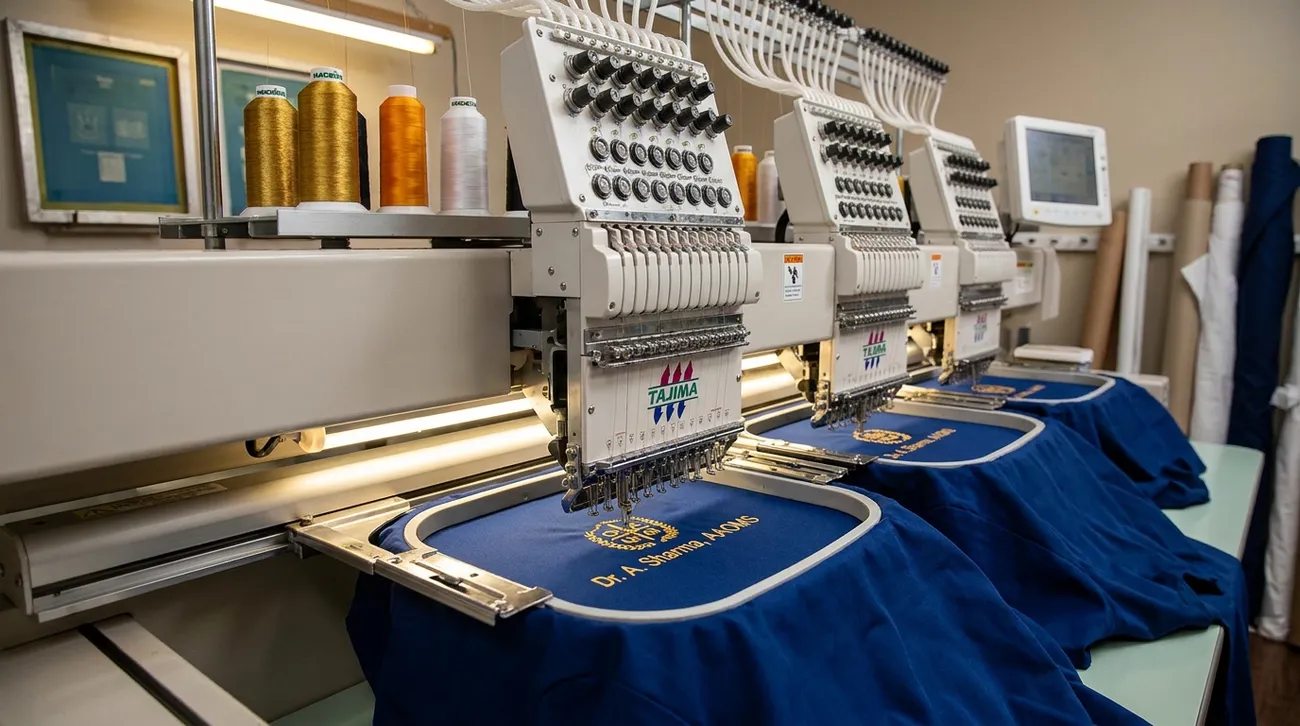
We send a digitised preview. You review it. We stitch a sample and photograph it under proper light. You approve. Then production starts.
If each of those steps crosses a day boundary, a two day process becomes five. On a large order, that is the difference between hitting a deadline and missing it.
Two things fix it.
Batch the approvals. Send us every logo, every name list and every placement decision in one message rather than four. We can return a single preview pack with all of it.
Use the overlap window deliberately. If you are in London, our morning is your early morning. Sending us the approval before you go to bed means it is waiting when we open, and you get the sample back the next morning your time.
Sudhir Sah, ordering from Doha, sends his approval before his shift. We stitch the sample the same afternoon, photograph it under proper light, and he has it before he sleeps.
We keep WhatsApp and email both open for this reason. For a quick yes or no on a placement, WhatsApp is faster. For a logo file and a specification, email is safer.
None of this is complicated. It just needs to be planned rather than discovered.
Need this measured properly?
Send your numbers, or book a call and we will take them with you.