27 Aug 2026 · aaoms Team · 1 min read
Stitch density: what thread count actually changes
A logo stitched at the wrong density looks bold on day one and turns into a solid block by month six.

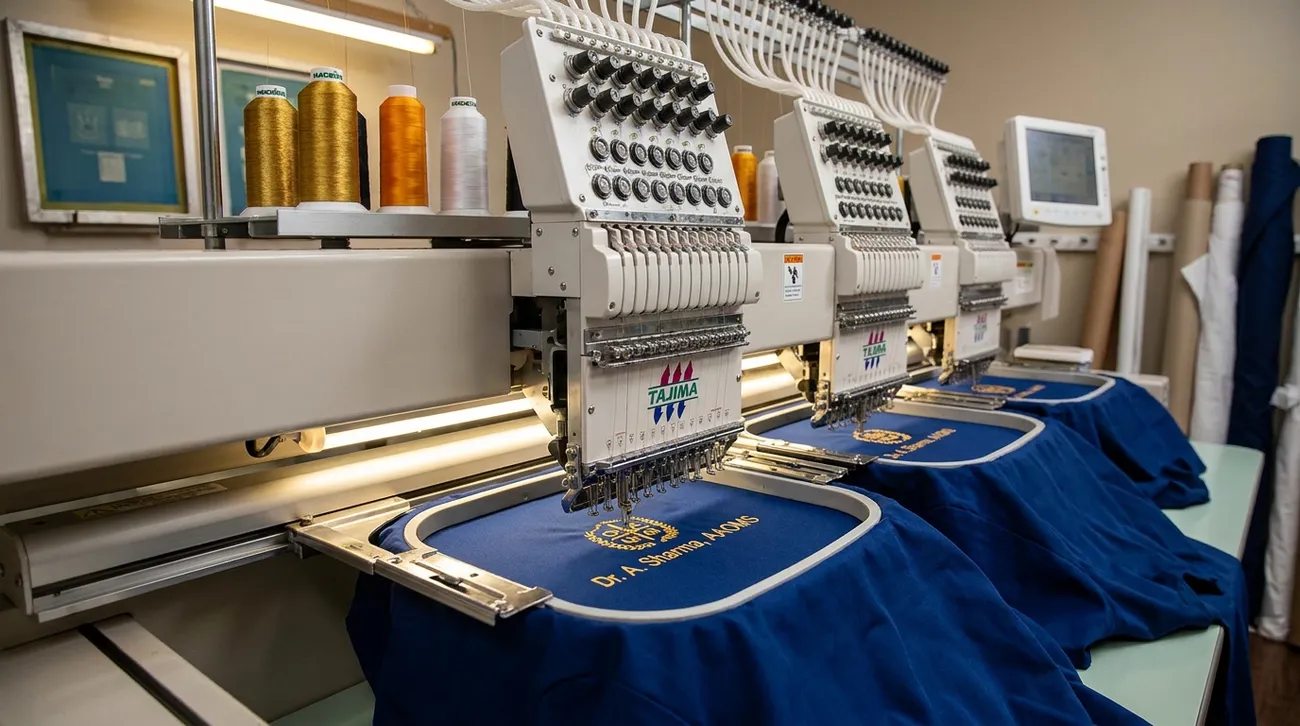
Embroidery density is the number of stitches packed into a square area. It is the single setting that decides whether a logo survives.
Too light, and the fabric shows through the design. The mark looks thin and unfinished, and on a dark garment the background colour bleeds into the thread.
Too dense, and the stitching starts to fight itself. Thread piles on thread, the design becomes stiff and raised, and the fabric underneath cannot recover. On a knit, that stiff patch pulls at the surrounding fabric and the whole garment distorts around it.
The right density depends on four things: the size of the mark, the type of fabric, the thread, and the detail in the artwork.
A large mark can run lighter per square centimetre than a small one and still read as solid. A small mark needs more, because the letters are narrower and there is less room for the thread to lay flat.
Fabric matters more than people expect. A dense mark on a light knit pushes the knit out of shape. The same density on a woven cotton holds cleanly. This is why a logo file that works on a polo placket often fails on a scrub chest without adjustment.
Detail is the last constraint. Thin strokes and small internal counters cannot be held at any density. The thread has a physical width, and below a certain size the detail closes up.
This is the point of digitising rather than converting. A digitised file sets density per section, so a heavy outer shape and a fine inner detail can both be correct in the same mark.
A uniform logo is worn for years. Density is not a setting to leave on default.
Need this measured properly?
Send your numbers, or book a call and we will take them with you.