9 Aug 2026 · aaoms Team · 1 min read
What unisex really means in a scrub
Unisex is a useful compromise, not a universal fit. Knowing where it works saves a lot of returns.
Unisex is one of the most misunderstood words in garment sizing. It does not mean the garment fits everyone. It means one pattern is offered to both men and women, with compromises built in.
Those compromises are worth knowing.
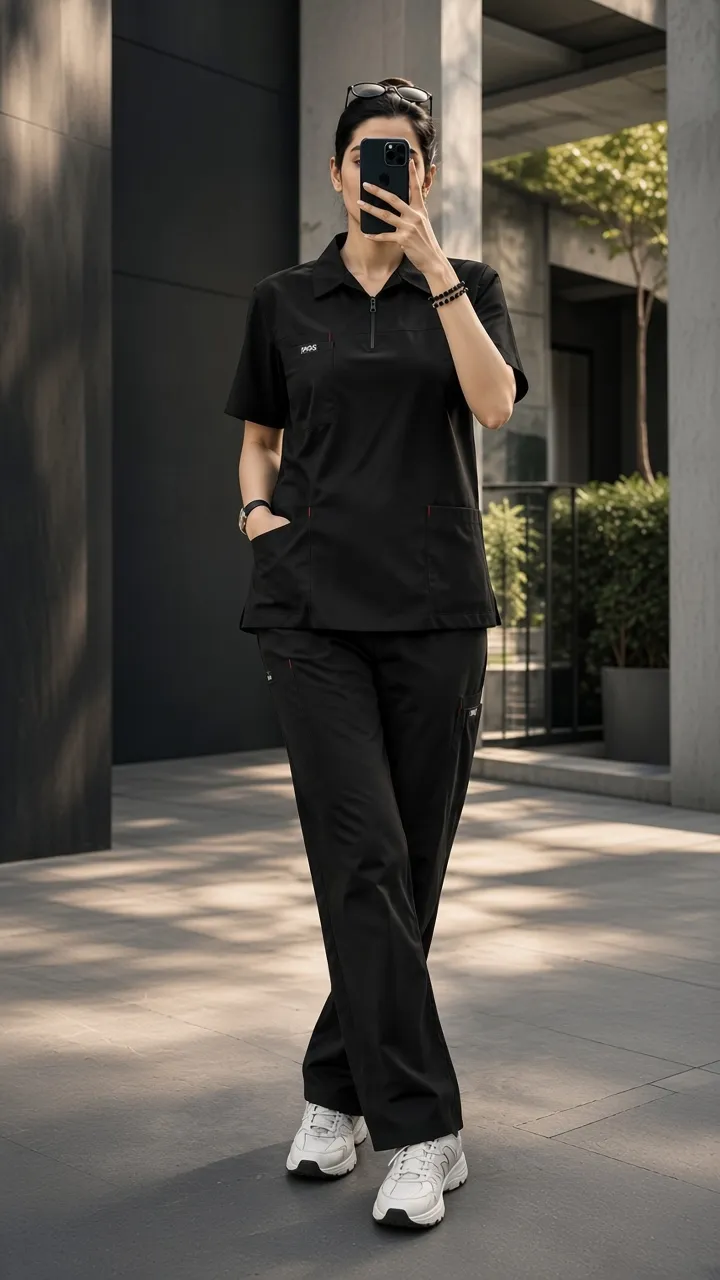
A unisex top generally has a straighter waist and a slightly narrower hip than a women's cut. On a wearer with a defined waist, it reads as boxy. On a broad shoulder, it reads as correctly simple.
The shoulder is where unisex earns its place. A well cut unisex block takes the median shoulder width and adjusts the armhole so that both a narrower and a broader frame can move in it. That is genuinely useful in a hospital, where a shared uniform pool is common.
Where it struggles is length and rise. Men and women of the same height often need different torso lengths and different trouser rises, and one block cannot serve both perfectly.
The practical answer is not to choose between unisex and gendered. It is to know which items carry the compromise well.
Tops work well unisex. Trousers less so, which is why many hospitals run a unisex top with a men's and a women's trouser.
For a small clinic ordering twenty sets, unisex keeps the stock simple. For a large hospital, separate cuts reduce returns and complaints, at the cost of a more complex size curve.
If you are unsure, order one unisex and one gendered sample in the same size and try both. The difference is obvious within a minute, and it is much cheaper to discover now than after the bulk run.
Need this measured properly?
Send your numbers, or book a call and we will take them with you.